

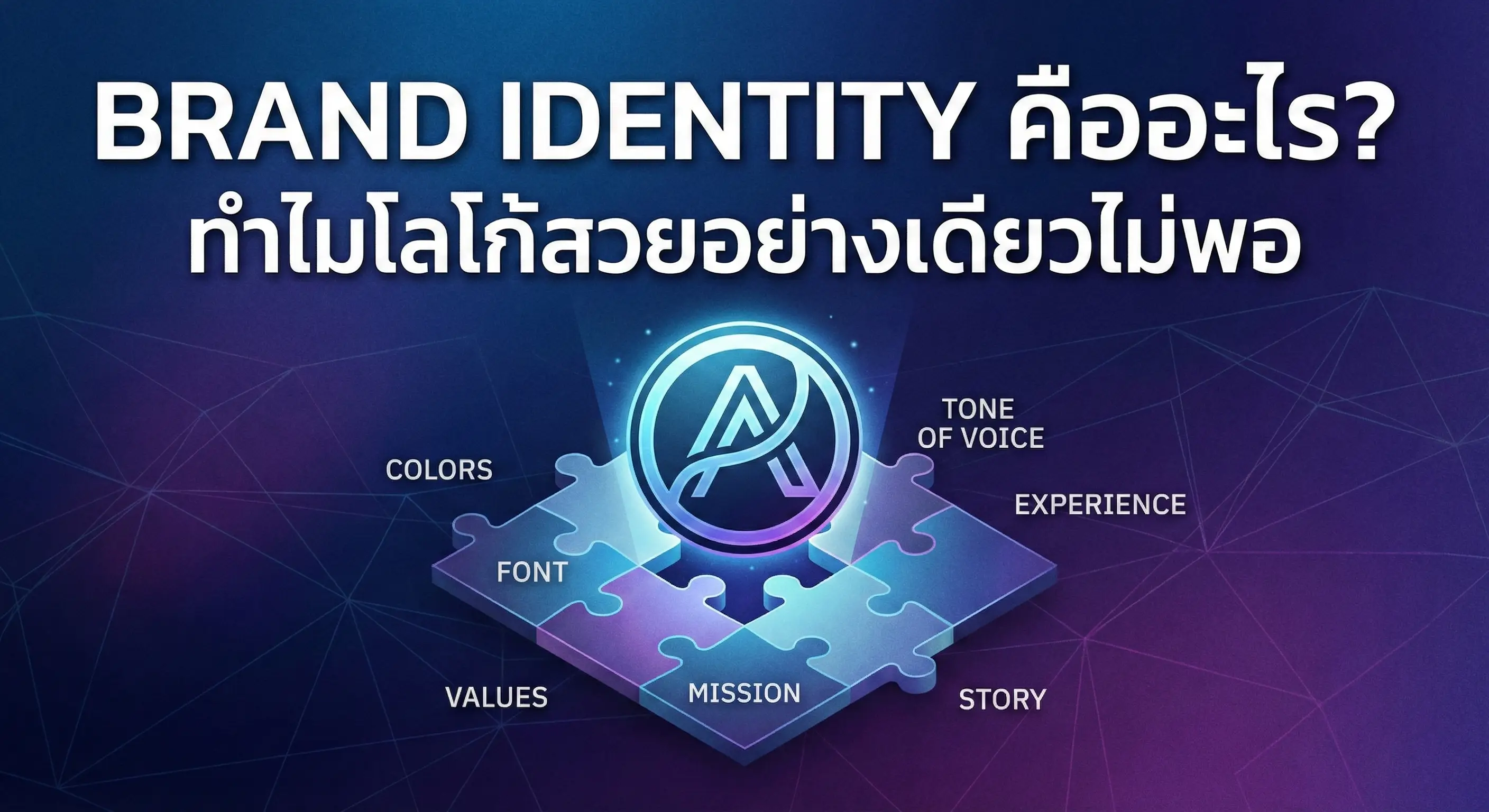
A complete guide to Brand Identity — from logos, colors, and fonts to Brand Guidelines, and why it matters for your business success.
Many people think branding is just about designing a beautiful logo. But the truth is, a logo is only a small part of Brand Identity — like a face being just one part of a person's whole identity.
What Is Brand Identity?
Brand Identity is the complete "personality" of your brand that customers can experience — both what they see (Visual) and what they feel (Emotional). It consists of:
• Visual Identity: Logo, colors, fonts, image style
• Brand Voice: Communication tone (polite, fun, formal)
• Brand Values: Core values the brand stands for
• Brand Personality: If the brand were a person, what kind of person would it be?
• Brand Experience: The experience customers have at every touchpoint
Elements of Visual Identity
1. Logo
A logo is the symbol that makes your brand recognizable. A good logo must:
Be memorable and not overly complex
Work at any size (from business cards to billboards)
Look good in both color and black-and-white
Reflect the brand's identity
Logo types include: Wordmark (name as logo, e.g., Google), Symbol (icon, e.g., Apple), Combination (mixed, e.g., Adidas), Emblem (seal, e.g., Starbucks)
2. Color Palette
Colors influence emotions and decision-making more than you think:
Red: Excitement, energy, urgency (Coca-Cola, YouTube)
Blue: Trust, professionalism, safety (Facebook, Samsung)
Green: Nature, health, freshness (Starbucks, Grab)
Yellow/Orange: Fun, warmth, positivity (McDonald's, Shopee)
Black: Luxury, premium, modern (Chanel, Nike)
Purple: Creativity, luxury (Cadbury, Twitch)
A strong brand has 1-2 primary colors and 2-3 secondary colors used consistently everywhere.
3. Typography
Font choices communicate brand personality:
Serif (with strokes, e.g., Times New Roman): Classic, trustworthy, formal
Sans-Serif (no strokes, e.g., Helvetica): Modern, clean, accessible
Script (handwritten): Elegant, creative, friendly
Display (decorative): Eye-catching, bold, used sparingly
Choose only 1-2 primary fonts and use them consistently across all channels.
4. Imagery Style
The style of photos and graphics your brand uses:
Photo color tone (bright/dark, warm/cool)
Photography style (realistic/creative)
Use of illustrations or icons
Photo editing guidelines
What Are Brand Guidelines and Why Do You Need Them?
Brand Guidelines (or Brand Manual) is a document that compiles all the rules for using your Brand Identity:
Correct logo usage (minimum size, clear space around logo, things to avoid)
Color codes (HEX, RGB, CMYK, Pantone)
Fonts and hierarchy
Writing style and tone of voice
Real-world usage examples
Why are they essential?
Ensures everyone on the team uses the brand consistently
Prevents logo misuse
Helps agencies and external partners stay on-brand
Projects professionalism
Mascots — Brand Characters
A mascot is a character created to represent the brand. Mascots help brands:
Have a tangible personality
Communicate emotions easily
Be more memorable than a logo alone
Create diverse content opportunities
Great examples: Krungthai's whale mascot, Chester Cheetah for Cheetos, the Duolingo Owl
Mascots aren't necessary for every brand — they're best suited for brands that want to appear friendly and approachable.
When Should You Rebrand?
The brand looks outdated
Targeting a new audience
Expanding into new business directions
The existing image has problems
People misunderstand what the brand stands for
Caution: Rebranding doesn't mean changing everything. Sometimes a refresh is enough.
Conclusion
A strong Brand Identity doesn't happen by accident. It comes from careful planning, thoughtful design, and maintaining consistency across every touchpoint — from the logo to the tone of voice.
A beautiful logo alone isn't enough. If colors, fonts, voice, and experience don't align, customers will be confused and won't remember your brand.
References
• American Marketing Association - Brand Identity
https://www.ama.org/marketing-news/
• 99designs - Brand Identity Guide
https://99designs.com/blog/logo-branding/brand-identity/
• Canva - Color Psychology in Branding
https://www.canva.com/colors/color-meanings/
• Smashing Magazine - Brand Guidelines
https://www.smashingmagazine.com/category/design/
• Nielsen Norman Group - Brand UX
https://www.nngroup.com/topic/brand-experience/


