

MAF Colony — Cloud and Local AI, Working as One System
A system that decides which work goes to a cloud model and which must stay on the machine, then runs both through one process — every job tracked, and the infrastructure repairing itself.
What We Built
MAF Colony is not one AI. It is several, each with its own job — some on a cloud model, some running entirely on the machine — with a manager that decides where each piece of work belongs.
That is the difference: different work should not use the same kind of AI. Work that must remember yesterday and ship something real needs an agent with its own memory. Work that finishes in one pass does not. And work touching data that cannot leave the building has to run locally, convenient or not.
The system makes that call every time, then carries the work through one process to the end.
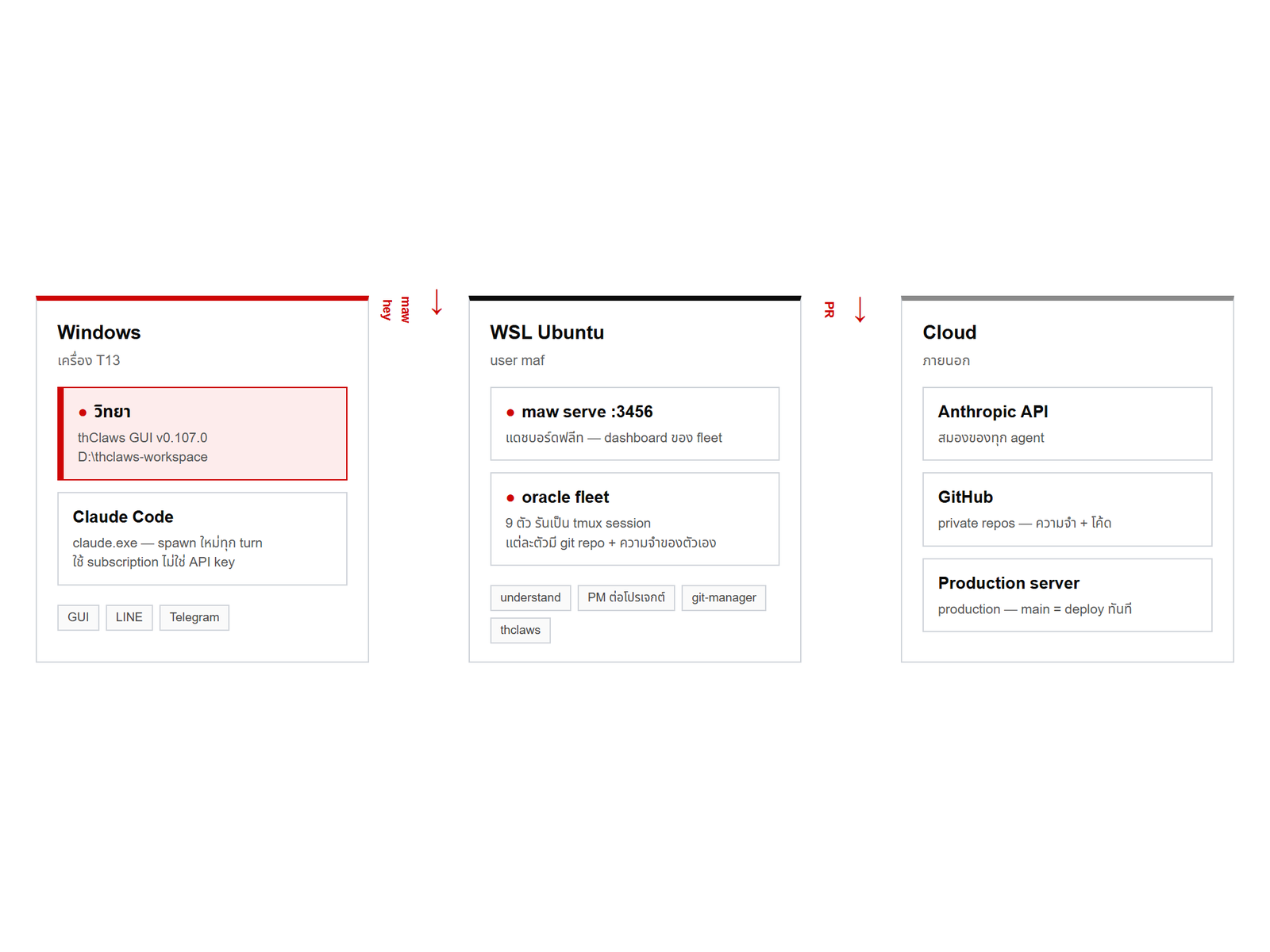
Measured after real use:
- Work that used to stall silently for weeks is caught within 5 minutes
- After a restart everything returns on its own — no step waits for a human
- Questions needing a decision are answered in 1-4 minutes, from a phone
The Problem
Most AI tooling an organisation buys hits two problems at once.
One, the same AI for every job. Drafting a paragraph and holding context across weeks go into the same tool. Easy work costs more than it should, hard work does not really get done, and sensitive data leaves the building without anyone deciding that it should.
Two, it dies quietly. Not with a red error, but with a page that still looks fine while nothing behind it has run for three days, and nobody finds out until someone happens to look.
We had both in our own system, and fixed them one at a time.
The Core: Decide Where the Work Belongs, First
One instruction does not take one path. The manager decides which track the work belongs to first, asking three things: must it be remembered across days · must it ship something real · may the data leave the machine. Every track then ends the same way: a person approves before anything reaches a client.
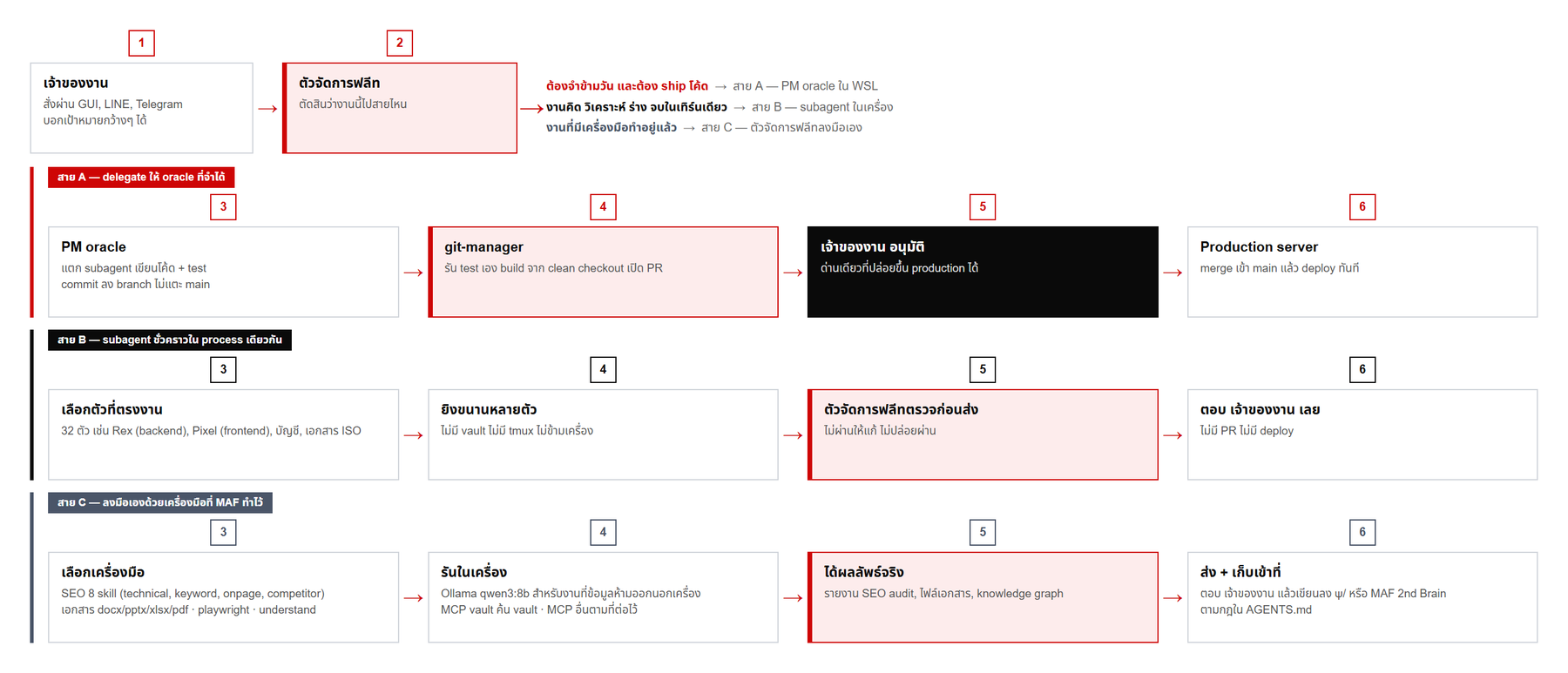
Track A — work that must persist and ships real output
Handled by the agent that owns that project, on a cloud model, with its own memory. It splits the work, writes to a branch and never to the main line, then hands it to a review gate that runs the tests itself from a clean copy before a human approves. Nothing reaches production without a person.
Track B — thinking, analysis and drafting that finishes in one pass
Temporary agents run in parallel inside a single process: no persistent memory, no separate workspace to set up. The manager checks the result before it goes anywhere; anything that fails goes back.
Track C — work whose data cannot leave the machine
A locally-run model with the tools we wrote — SEO checks, documents, code maps — and knowledge lookups over MCP. Not a byte leaves the machine, and the result is filed into the company knowledge base so the next person finds it.
The split is not about difficulty. It is about memory and where data is allowed to be — which drive cost and risk more than model capability does.
Every Job Tracked, and Infrastructure That Repairs Itself
With several agents running at once, the question is not whether they work. It is who is doing what right now, and what is waiting on a decision. Without an answer to that, the system keeps going while nobody notices it stopped.
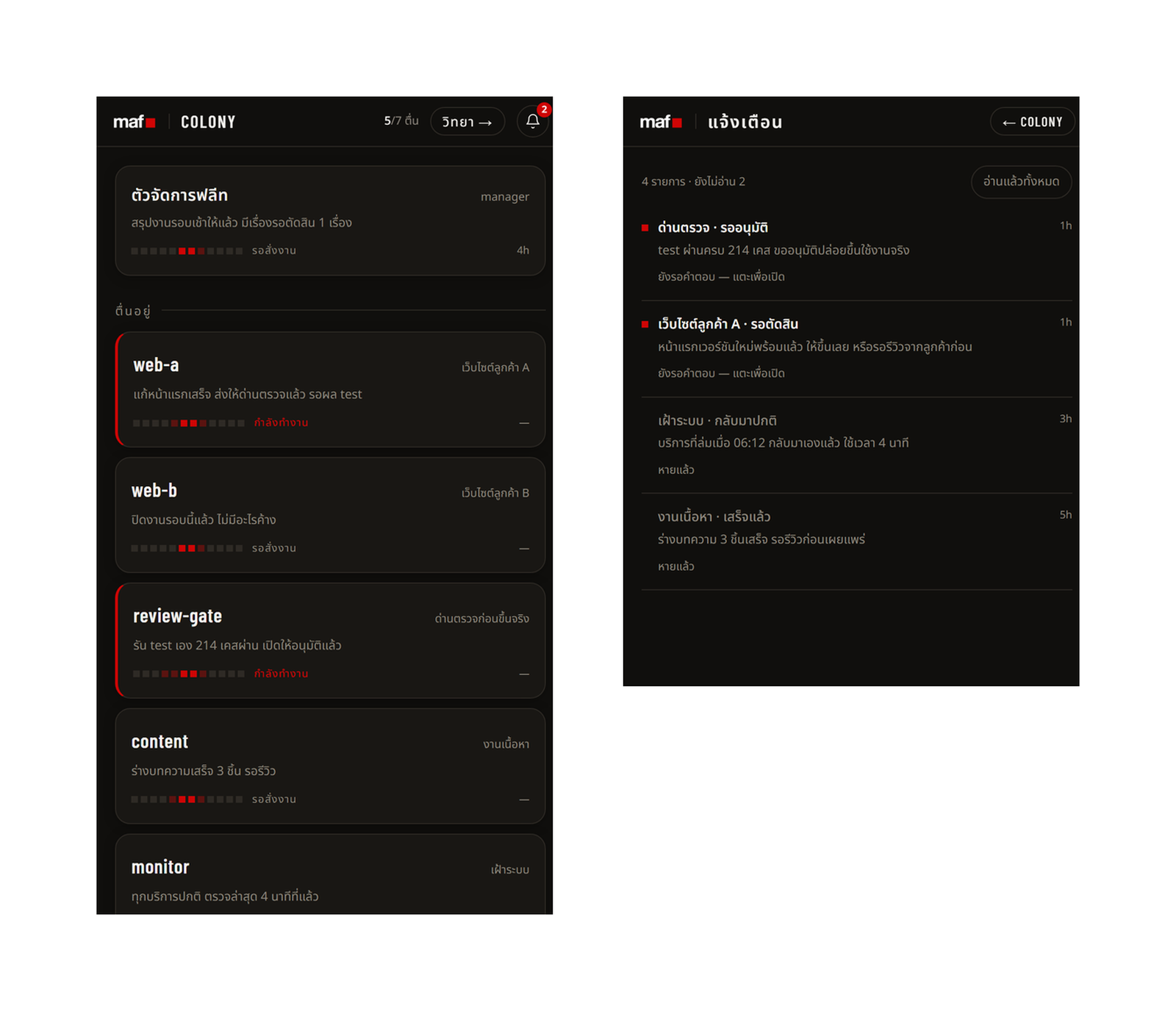
The actual app; the data shown is illustrative. Left: what is working, idle or asleep. Right: what is waiting on a decision, answerable in place.
The whole system is reachable from a phone behind an identity check: status, each agent's work, new instructions, and answers to open questions. Agents with nothing to do put themselves to sleep and wake the moment work arrives.
What makes it usable is not the access but notifications that fire once per thing until it clears — not once every five minutes until it has fired 288 times in a day. Too many alerts and no alerts produce the same result: people stop reading.
When the infrastructure breaks
A watcher runs every five minutes over the things that have each failed for real, and repairs what is safe to repair. What it cannot fix, it reports along with the command to fix it — an alert saying it knows the fix and will not apply it is worse than either choice.
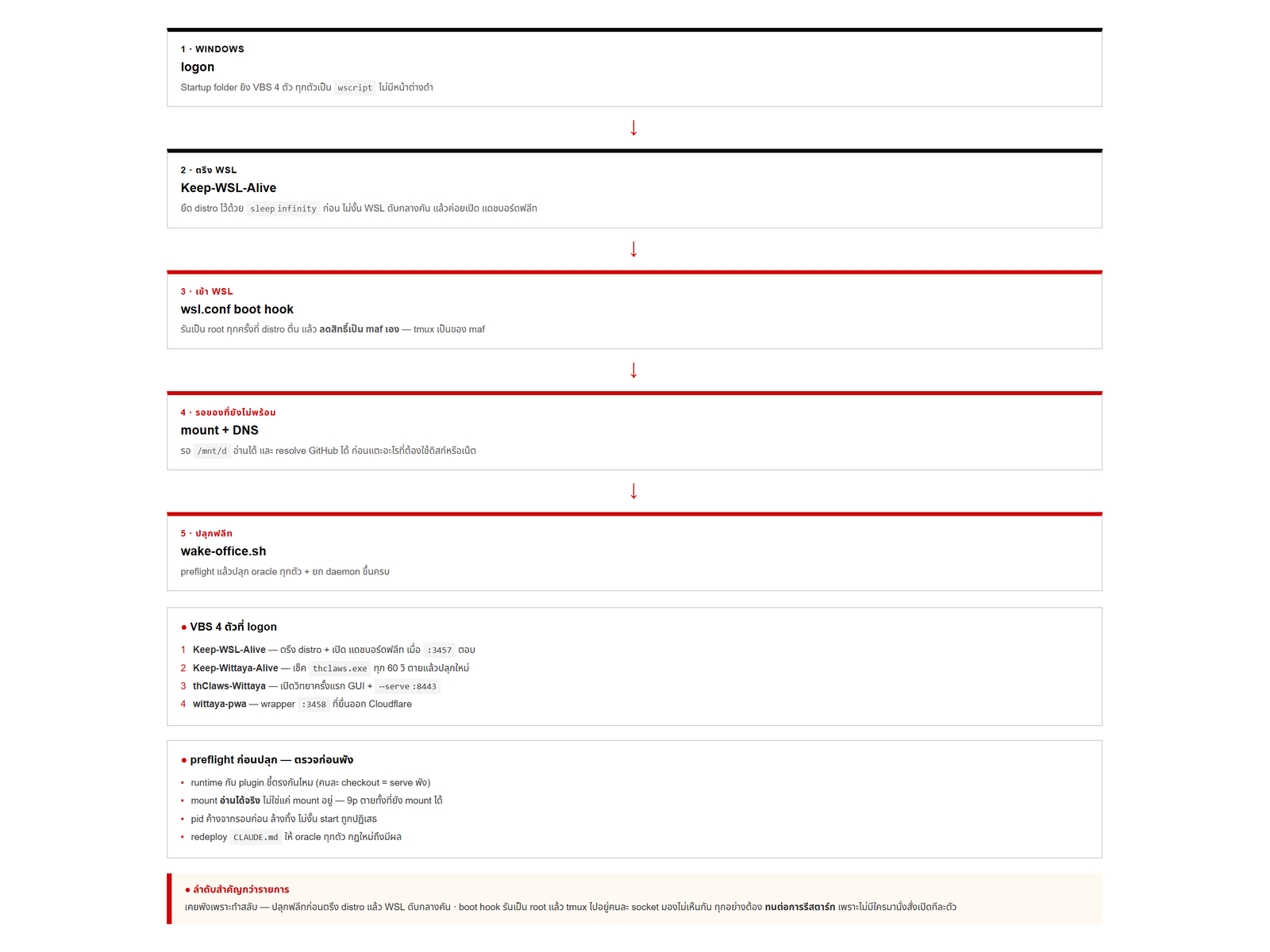
After a restart, everything returns from login onward with no step waiting on a person. The lesson we paid for: order matters more than the list. Waking the agents before pinning the environment killed the environment mid-run and took everything with it — without one error line.
Results, and What Your Business Can Take From It
What this proves is not how capable the models are. It is that deciding where work belongs matters more than which model you pick.
Work that fits this shape
- Content and marketing — research, drafting, review, publishing, each a separate agent with a human approval where judgement is needed
- Documents and quotations — pull from existing systems, assemble, check completeness, hand the final call to a person
- Work whose data cannot leave — customer records, pricing, contracts, financials, processed by a local model without ever being sent out
- Monitoring and reporting — watch what matters and speak only when something is genuinely off
What it takes to work
- Separate what must be remembered from what must not. That decides which kind of AI you need and what you pay
- Decide up front which data may never leave. Deciding later means it already has
- Put people at decisions, not repetition. The system prepares everything and asks one question answerable in ten seconds
- Measure the artifact, not the screen — and let the system report itself on quiet days too
Where to start — not with dozens of agents. A task repeated several times a week, with clear steps, currently costing 5-10 hours of someone's time, pays back in the first month and becomes the base for the next one.
The difference between automation that works and automation that dies quietly is not how clever the AI is. It is one question: when it breaks, will anyone know, and how fast?
Ready to Start Your Project?
Contact us today for a free consultation and start turning your business vision into reality